Our Quality Promise – Zero Compromise, Every Batch
How Venistro Nutralife's 7-stage quality system protects your brand and your customers.

Our Quality Framework At a Glance
| Stage | What We Check | Standard Applied |
|---|---|---|
| Raw Materials | Identity, purity, heavy metals, contaminants | WHO-GMP, HACCP |
| In-Process | Temperature, humidity, cross-contamination | ISO 9001:2015 |
| Finished Product | Potency, purity, microbial safety, stability | FSSAI, WHO-GMP |
| Packaging | Moisture, light, oxygen protection, labelling accuracy | ISO 22000 |
| Documentation | Batch records, Certificate of Analysis, audit trails | GMP Compliant |
Key QA Practices of Leading Nutraceutical Product Manufacturers in India
1. Certifications & Regulatory Compliance → Globally Certified. Locally Trusted.
Our manufacturing practices strictly follow internationally recognised standards such as WHO-GMP, ISO 9001:2015, ISO 22000, FSSAI, and HACCP. These certifications demonstrate our commitment to maintaining global quality benchmarks, ensuring that every nutraceutical product manufactured under our supervision meets strict safety, quality, and regulatory requirements.
2. Raw Material Sourcing & Incoming QC → Quality Starts Before Production
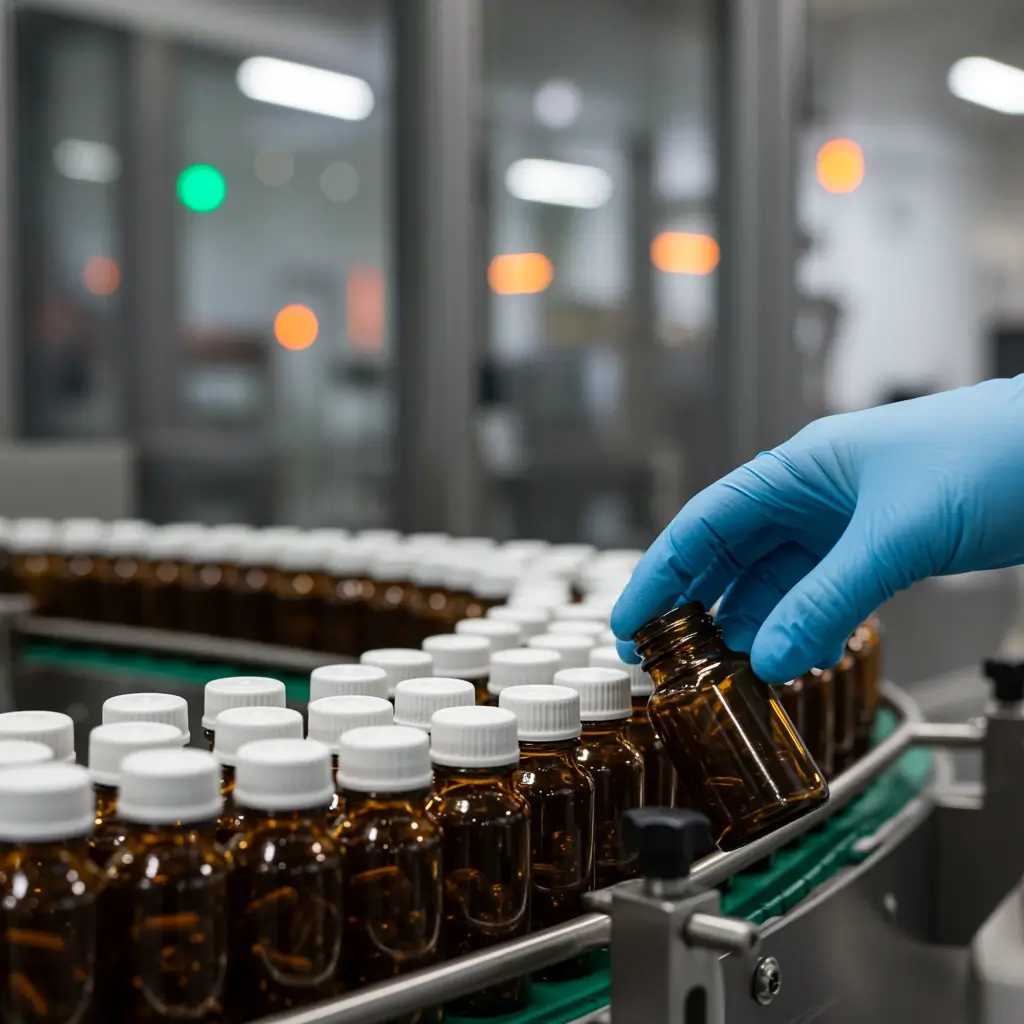
Quality begins long before the production process starts. Our experienced quality team carefully validates vendor credentials, verifies raw material quality, and checks the purity and identification of herbs and active ingredients. Each raw material batch undergoes strict incoming quality checks, supplier audits, and contamination testing to ensure the absence of heavy metals, adulterants, or impurities. This traceability ensures complete transparency and reliability in our manufacturing process.
3. Production Control & Process QA → Precision at Every Stage
Our production facilities are designed with modern infrastructure, controlled environments, and validated equipment to maintain precision during manufacturing. Critical parameters such as temperature, humidity, and contamination control are carefully monitored throughout production. Batch-wise documentation, process monitoring, in-process quality checks, and clearly defined Standard Operating Procedures (SOPs) ensure consistency and efficiency at every stage.
4. Finished Product Testing & Release → No Batch Leaves Without Our Signature
Every batch of nutraceutical products undergoes rigorous quality testing before release. Our testing procedures verify product identity, potency, purity, microbial safety, heavy metal limits, and shelf-life stability. Certificate of Analysis (CoA) documentation is generated for each batch, and in certain cases third-party laboratory testing is conducted to ensure independent verification. This strict release protocol helps maintain product reliability and brand trust.
5. Packaging, Labelling & Storage → Protected From Production to Delivery
Quality assurance also includes protective packaging, accurate labelling, and proper storage conditions. Our packaging solutions safeguard products from moisture, light, and oxygen exposure while maintaining product stability. Labels clearly display essential information such as composition, batch number, manufacturing date, expiry date, and regulatory details. Controlled warehousing and transportation conditions further ensure product integrity until it reaches the end consumer.
6. Continuous Improvement → We Never Stop Raising the Bar
Continuous improvement is a core principle of our quality framework. Our research and development team constantly evaluates formulations and production processes to enhance efficiency and maintain high quality standards. Detailed documentation, transparent reporting, and periodic internal and external audits ensure compliance and support ongoing process optimisation.
7. Ethical & Sustainable Practices → Good for Your Brand. Good for the Planet.
Beyond manufacturing quality, we also focus on ethical and sustainable practices. This includes responsible sourcing of raw materials, eco-friendly packaging solutions, waste reduction initiatives, and corporate social responsibility efforts. These initiatives strengthen our commitment to building responsible nutraceutical brands while protecting environmental and social well-being.